Two philosophies of fire. Understanding when each one serves a space — and why the best designers think on a spectrum.
Choosing between a linear and traditional fireplace isn't just an aesthetic decision — it's a statement about how you want a room to feel. Both can be spectacular. Both can be terrible. The difference is almost always about context.
It's not binary. The modern fireplace exists on a spectrum from full traditional (arched opening, carved mantel, hearth extension) to pure linear (frameless ribbon of flame, flush with wall — see our linear fireplace ideas guide for deep-dive). Between those extremes lives a rich middle ground — transitional designs that blend the warmth of traditional with the clean geometry of modern.
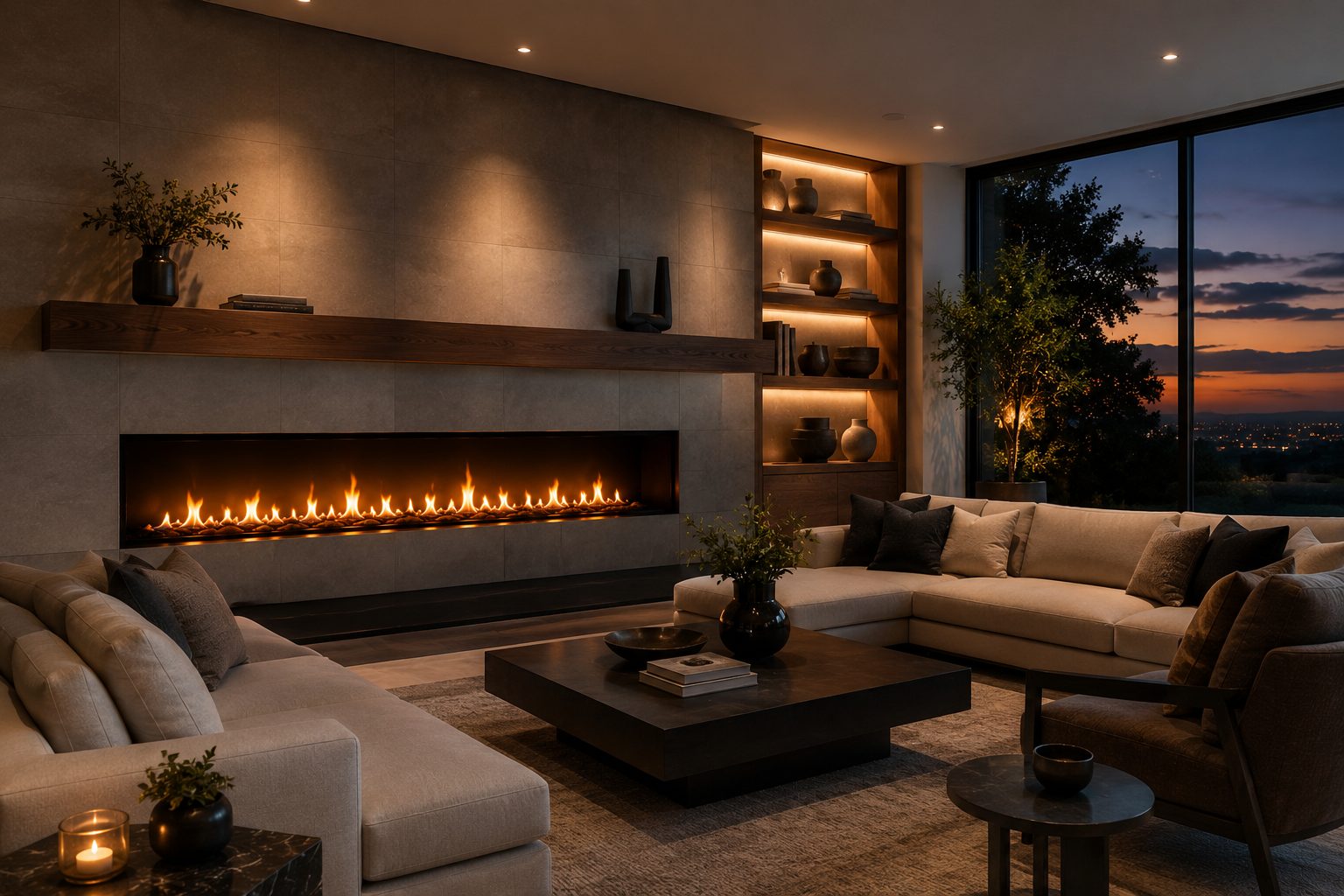
Wide, low-profile flame pattern. Minimal or no surround. Flush wall integration. Clean geometric lines. Often frameless glass. Best with: modern architecture, minimalist interiors, media walls, room dividers.
Taller, narrower opening. Defined surround and mantel. Hearth extension. Decorative elements (corbels, keystones, molding). Visible firebox depth. Best with: craftsman, colonial, Mediterranean, farmhouse, or eclectic interiors.
Linear fireplaces thrive in spaces that already commit to horizontal planes and clean lines. If your ceiling is flat, your walls are smooth, and your furniture is low-profile, a linear fireplace will feel like a natural extension of the architecture. It doesn't demand attention — it inhabits the wall.
The most successful linear installations run the full width of a feature wall, often beneath a mounted television or artwork. The flame becomes an ambient layer — more like architectural lighting than a focal point.
Traditional fireplaces earn their place in rooms that have architectural character: crown molding, wood floors, paneled walls, or coffered ceilings. In these spaces, a linear unit can feel cold and disconnected — an alien element in a room with personality.
A well-executed traditional fireplace in the right room provides something linear can't: a sense of history, weight, and rootedness. The mantel invites display. The hearth extends the gathering space. The proportions create a natural frame for the human eye.
For most homeowners — especially those with homes built between 1990 and 2020 — the best answer is neither fully linear nor fully traditional. Transitional designs use clean materials (stone slabs, minimal trim, simple mantels) with proportions that still feel like a traditional fireplace. They work in almost any room because they don't commit too hard in either direction.
Let your home's existing architecture guide the decision. If the room has clean lines and minimal trim, lean linear. If the room has character details and traditional proportions, lean traditional. If you're unsure, transitional gives you the widest margin for success.
Depth: Linear units are typically shallower (12-16") and easier to install in existing walls. Traditional units need more depth (18-24") for proper flame presentation.
Cost: Premium linear units from quality manufacturers start around $4,000-$8,000 for the unit alone. Traditional units with quality surrounds are similar. The surround work often exceeds the unit cost in either case.
Viewing angle: Linear units look best from directly in front. Traditional openings are more forgiving from side angles — important in rooms where the fireplace isn't centered in your main seating view.
Explore your own vision with our AI design tool or connect with a specialist.