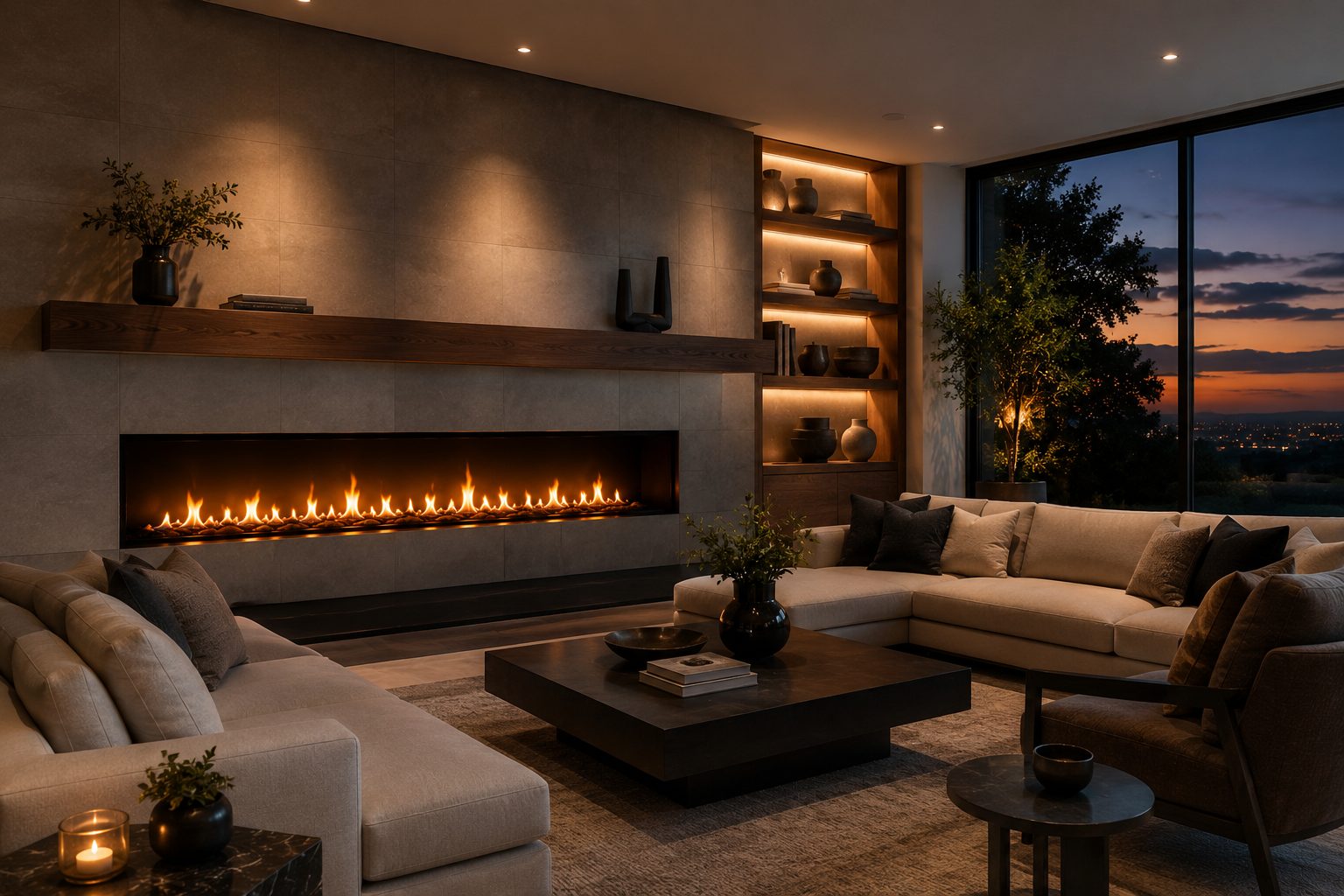
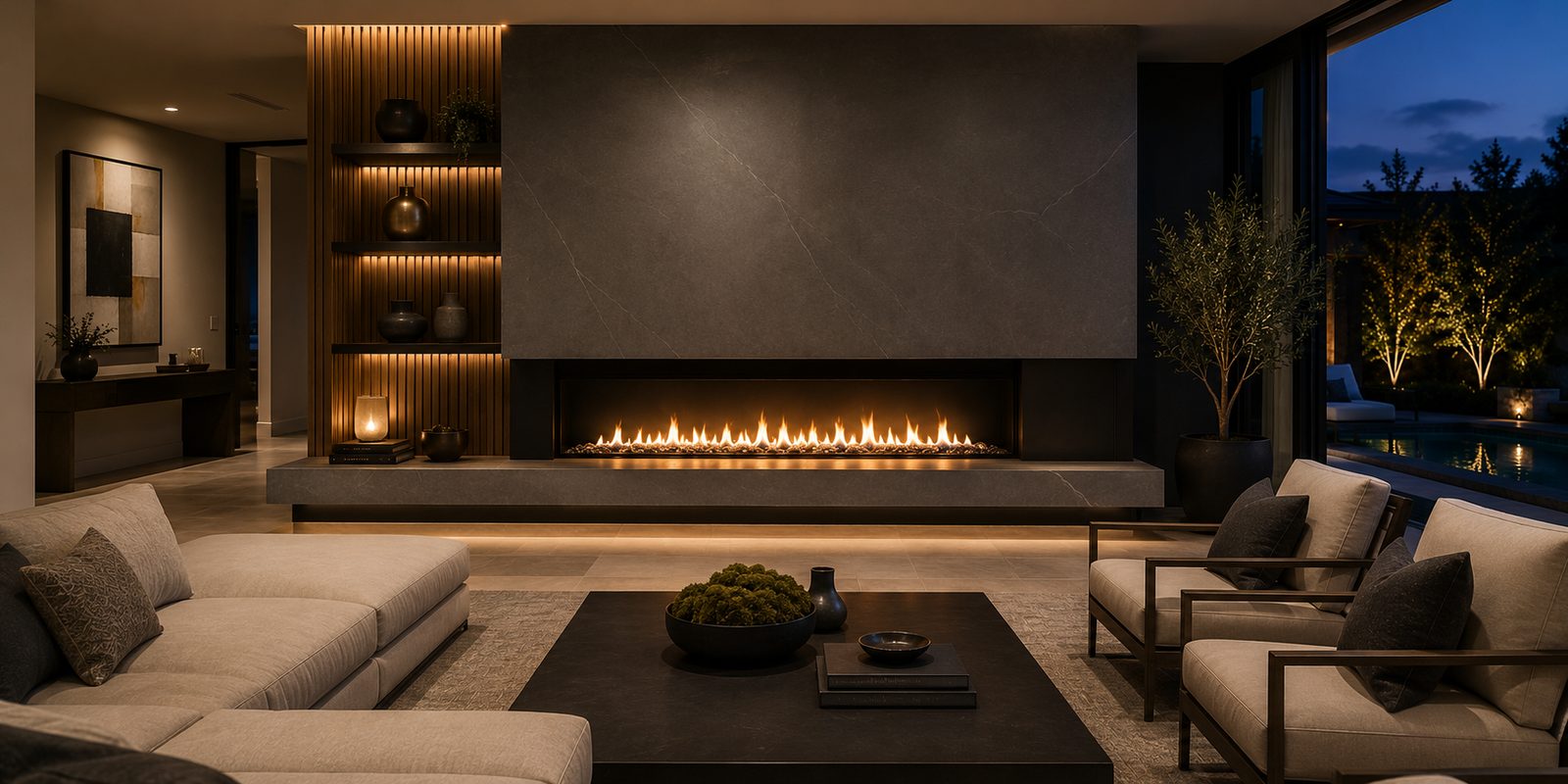
Vapor technology, zero-clearance freedom, and a design conversation that’s finally catching up to the possibilities.
Electric fireplaces used to be the budget option — plastic logs with a rotating light behind them. That era is over. Today's premium electric units use water vapor, holographic projection, and advanced LED systems to create flame effects that fool even experienced designers on first glance.
Three technologies have transformed electric fireplaces from novelty to legitimate design element:
Water vapor (steam) fireplaces — ultrasonic mist with LED illumination creates three-dimensional flames you can pass your hand through. The effect is mesmerizing and nearly impossible to distinguish from gas at conversational distance. Brands like Dimplex Opti-Myst and European manufacturers lead this category.
Holographic/LED systems — advanced light projection creates the illusion of depth and movement within a flat panel. No water, no maintenance, no moving parts. The latest generation uses multiple light layers to simulate flame depth convincingly.
Hybrid units — combining real crushed glass or crystal media with LED underlighting and subtle steam creates a composite effect that reads as real fire in ambient lighting conditions.
Electric fireplaces excel in situations where gas or wood are impossible (for a detailed comparison, see our gas vs electric guide), impractical, or unnecessary:
Condos, apartments, and interior walls without chase space. If you can run a 120V or 240V circuit, you can install a fireplace. This opens up walls and positions that would never work for combustion units.
Spaces where combustion products and oxygen consumption are concerns. Electric units produce zero emissions and require no ventilation, making them ideal for enclosed sleeping or bathing spaces.
Hotels, restaurants, and retail spaces where fire code prohibits real flame but the ambiance of fire is desired. The best commercial electric installations are indistinguishable from gas to guests.
Existing homes where running a gas line or building a chimney would be prohibitively expensive. Electric converts any wall into a fireplace wall with minimal construction.
Flame realism varies enormously between manufacturers. Key indicators of quality: multiple flame color options, adjustable intensity, realistic ember bed, no visible mechanical components, and a flame pattern that doesn't repeat every few seconds. Budget units under $1,000 rarely achieve convincing realism. Quality starts around $2,500-$5,000 for residential-grade units.
The media wall: A linear electric unit recessed below a television, stretching the full width of the wall. Since electric produces no rising heat, it's safe to mount a TV directly above — unlike gas or wood.
Room dividers: Double-sided electric units require no venting, making them perfect for see-through room divider applications where a gas unit would need complex ductwork.
Furniture integration: Electric units can be built into TV stands, mantels, kitchen islands, and custom cabinetry. The zero-clearance requirement means no buffer space needed between the unit and combustible materials.
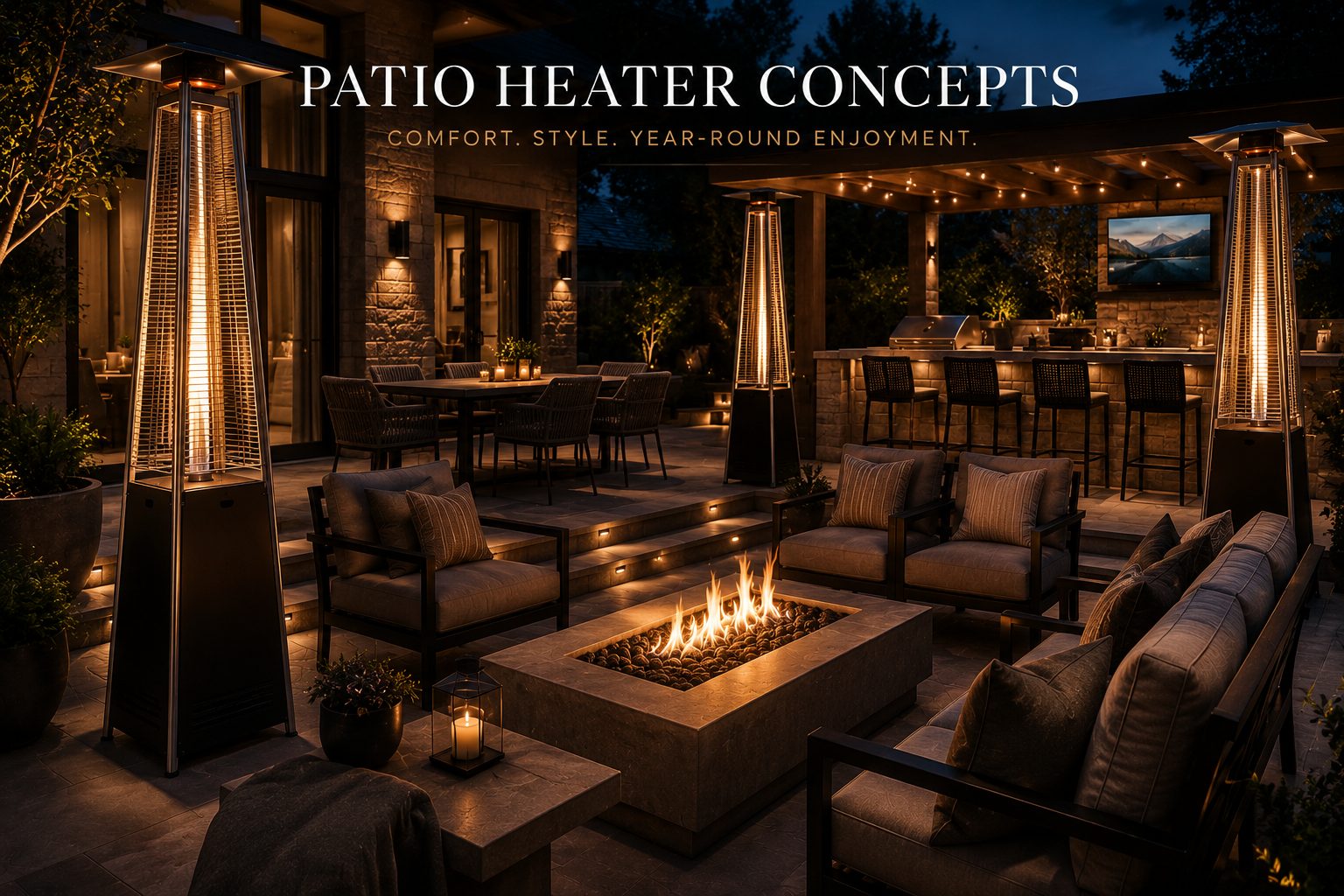
Outdoor covered spaces: Weather-rated electric units can provide ambient flame effect in covered patios and three-season rooms where gas might be overkill or unavailable.
Can electric truly replicate real flame? In bright daylight from 3 feet away — no. Nothing matches the irregular dance of actual combustion. But in the conditions where most fireplaces are actually enjoyed — evening, ambient lighting, from across a room — the best electric units create an atmosphere that serves the same emotional purpose as real fire: warmth, movement, and presence.
The question isn't "is it real?" It's "does it make the room feel better?" For well-chosen, properly installed electric units, the answer is consistently yes.
Explore your own vision with our AI design tool or connect with a specialist.