Beyond the mushroom heater. How modern warmth solutions are becoming sculptural, integrated, and genuinely beautiful.
The portable propane mushroom heater has become the default image of outdoor heating — and that's a problem. Because when you design heating into an outdoor space from the beginning, the results are invisible, powerful, and infinitely more elegant.
Freestanding propane heaters heat the air above you. They're visually dominant, consume floor space, require propane tank storage and replacement, and they tip over. They exist because they require zero planning — you buy one, roll it outside, and light it. For a restaurant patio that changes layout seasonally, that flexibility makes sense. For a designed home outdoor space, it's a missed opportunity.
Infrared heaters work differently from propane mushrooms. Instead of heating the air (which wind immediately carries away), they heat objects and people directly — the way sunlight does. This makes them dramatically more effective outdoors, and it means they can be mounted overhead, out of sight.
The best installations integrate infrared heating elements into the architecture: recessed into pergola beams, mounted along soffit edges, or integrated into the underside of shade structures. The heater disappears. The warmth appears. Guests feel it without seeing the source.
Coverage: roughly 8-12 sqft per kW. A typical dining area (10x12') needs 12-16 kW of infrared heating for comfortable winter evening use. Gas infrared provides more heat per dollar; electric infrared is easier to install and zone-control.
Electric infrared — easier to install (just needs wiring), instant on/off, zone-controllable, no combustion products. Available in short-wave (intense, visible glow) and medium-wave (gentler, less visible). Short-wave is best for open-air areas; medium-wave for covered spaces.
Gas infrared — higher output per unit, lower operating cost for large areas, requires gas line and venting. Best for large commercial-style outdoor spaces or when electric capacity is limited.
Dining zone: Overhead infrared panels or strips mounted 8-9' above table height. Even coverage across the seating area. Switch or dimmer controlled from the kitchen area.
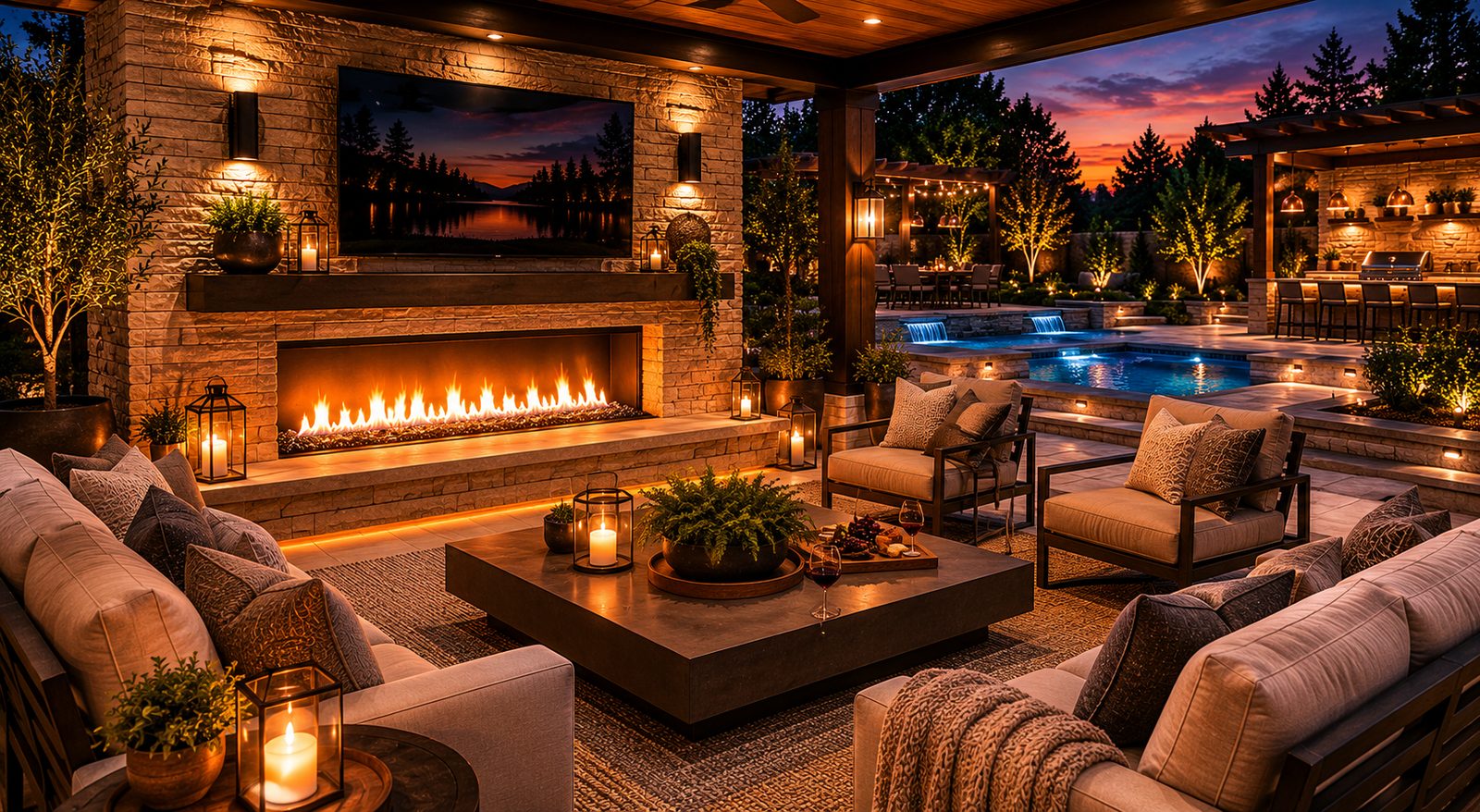
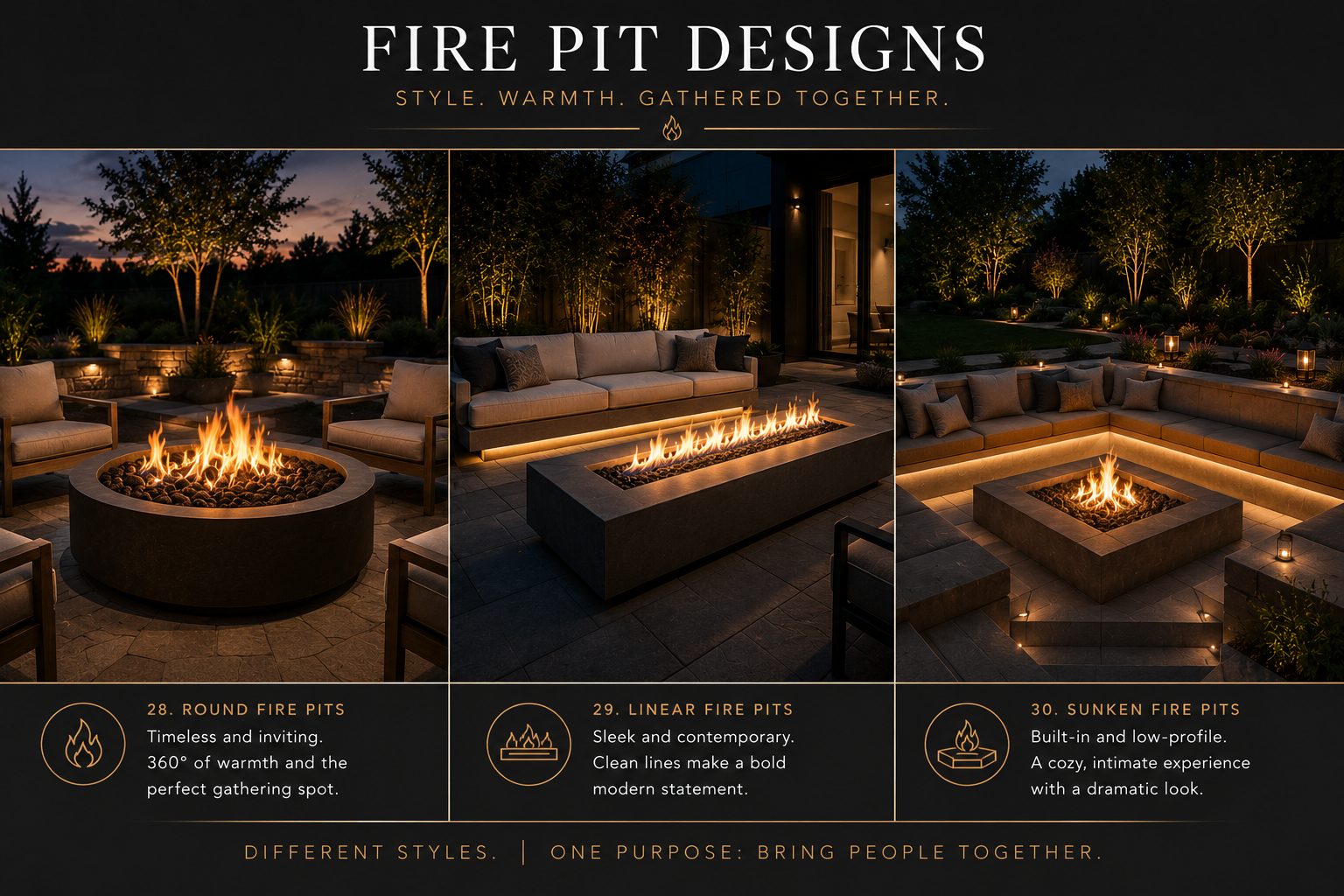
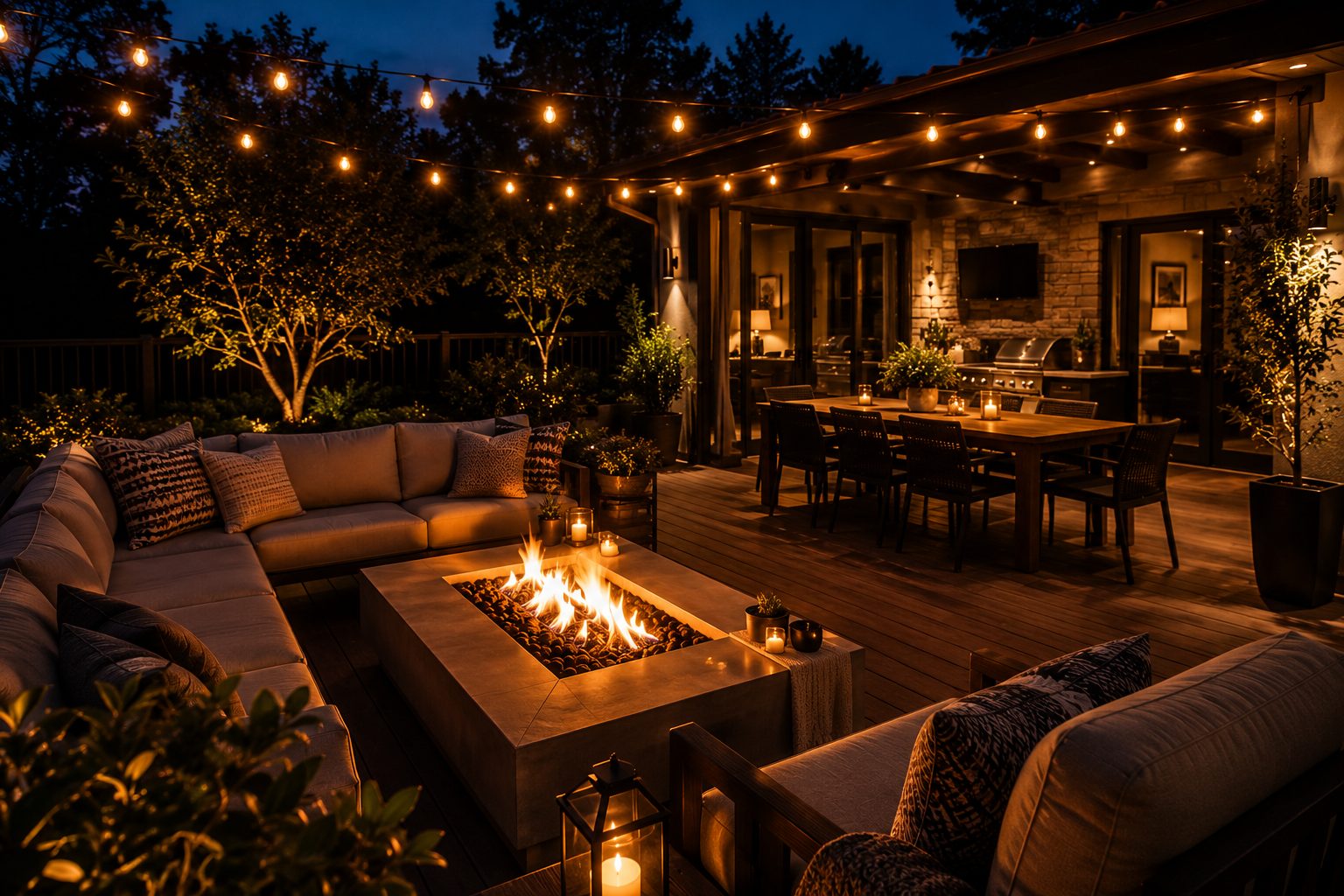
Lounge zone: Fire feature provides radiant warmth. Supplement with side-mounted infrared for extended range. The fire does the emotional work; the infrared does the comfort work.
Cooking zone: The grill and cooktop generate their own heat. Focus supplemental heating on the prep and serving areas where the cook stands.
Transition zone: Heated flooring (hydronic or electric radiant) for the threshold between interior and exterior. Walking from a warm house onto cold pavers breaks the indoor-outdoor flow. Heated pavers solve it.
The most cost-effective outdoor "heater" is a well-placed wind screen. A glass wind wall on the prevailing-wind side of an outdoor space can raise the effective temperature by 10-15°F without consuming any energy. Glass preserves the view; stone or concrete walls can double as design features.
The best outdoor heating is layered: wind protection first (passive, free), then fire features (dual purpose: atmosphere + warmth), then infrared supplements (targeted comfort). Each layer reduces the demand on the next.
Explore your own vision with our AI design tool or connect with a specialist.