The backyard has evolved from afterthought to primary living space. Here’s how modern California homes are redefining outdoor rooms.
Southern California's climate gives homeowners something rare: the ability to live outdoors nearly year-round. The best outdoor living spaces don't just take advantage of that — they're designed to make indoor spaces feel like the compromise.
The defining idea behind modern outdoor living design is simple: treat your backyard like a room (explore our modern backyard design guide). Not a yard with furniture in it — an actual room, with zones, purpose, flow, and atmosphere.
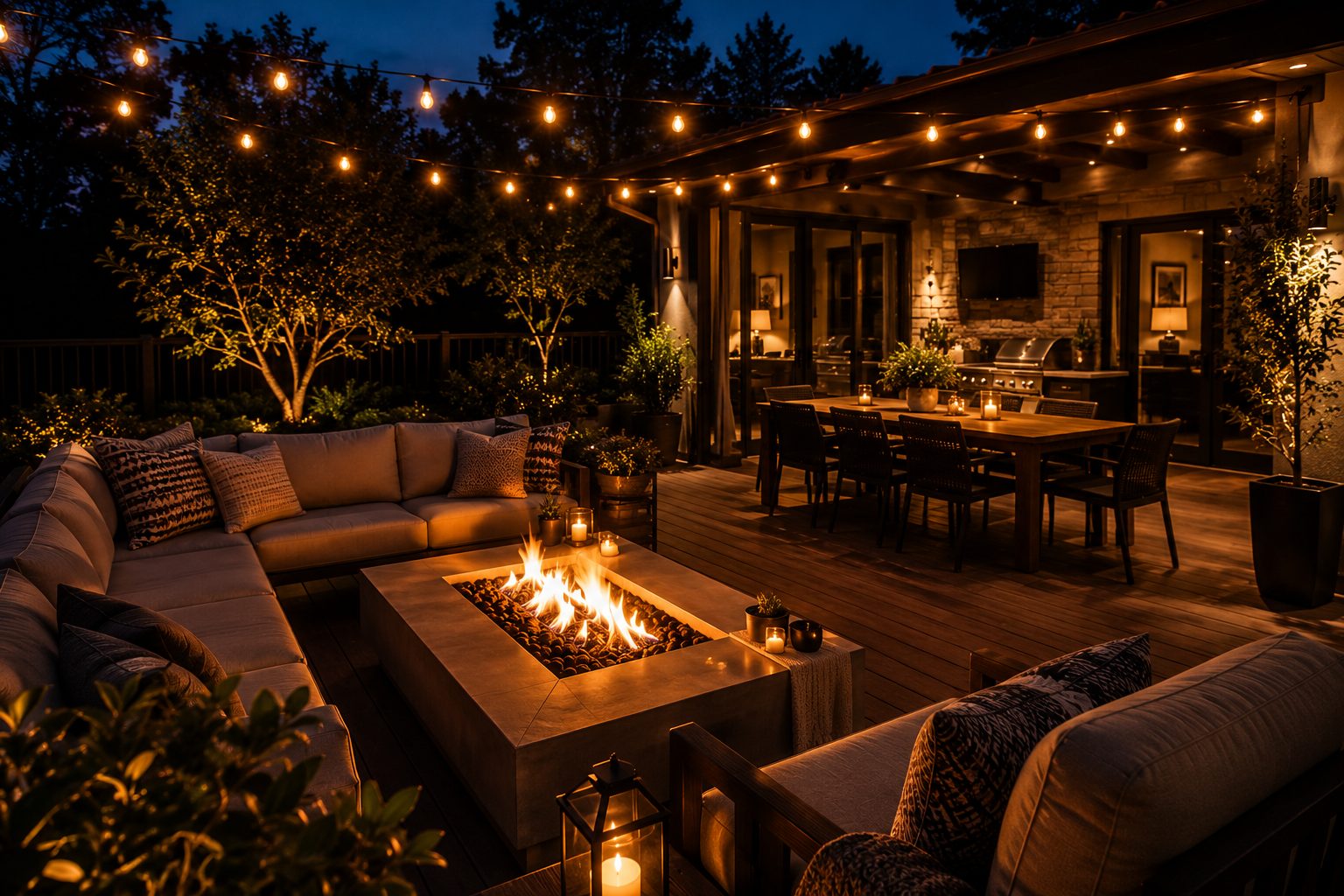
This means defined spaces for cooking, dining, lounging, and gathering. It means lighting that creates mood after sunset. It means materials that are both durable and beautiful. And almost always, it means fire — the element that anchors everything else.
Cooking zone (kitchen or grill), dining zone (table for 6-8), lounge zone (deep seating around fire), transition zone (connecting to interior), and atmosphere zone (lighting, landscaping, water features).
In every well-designed outdoor space, there's a gravitational center. Something that draws the eye, organizes the furniture, and gives people a reason to stay after dinner. Fire is uniquely suited to this role because it engages every sense — sight, sound, warmth, even smell.
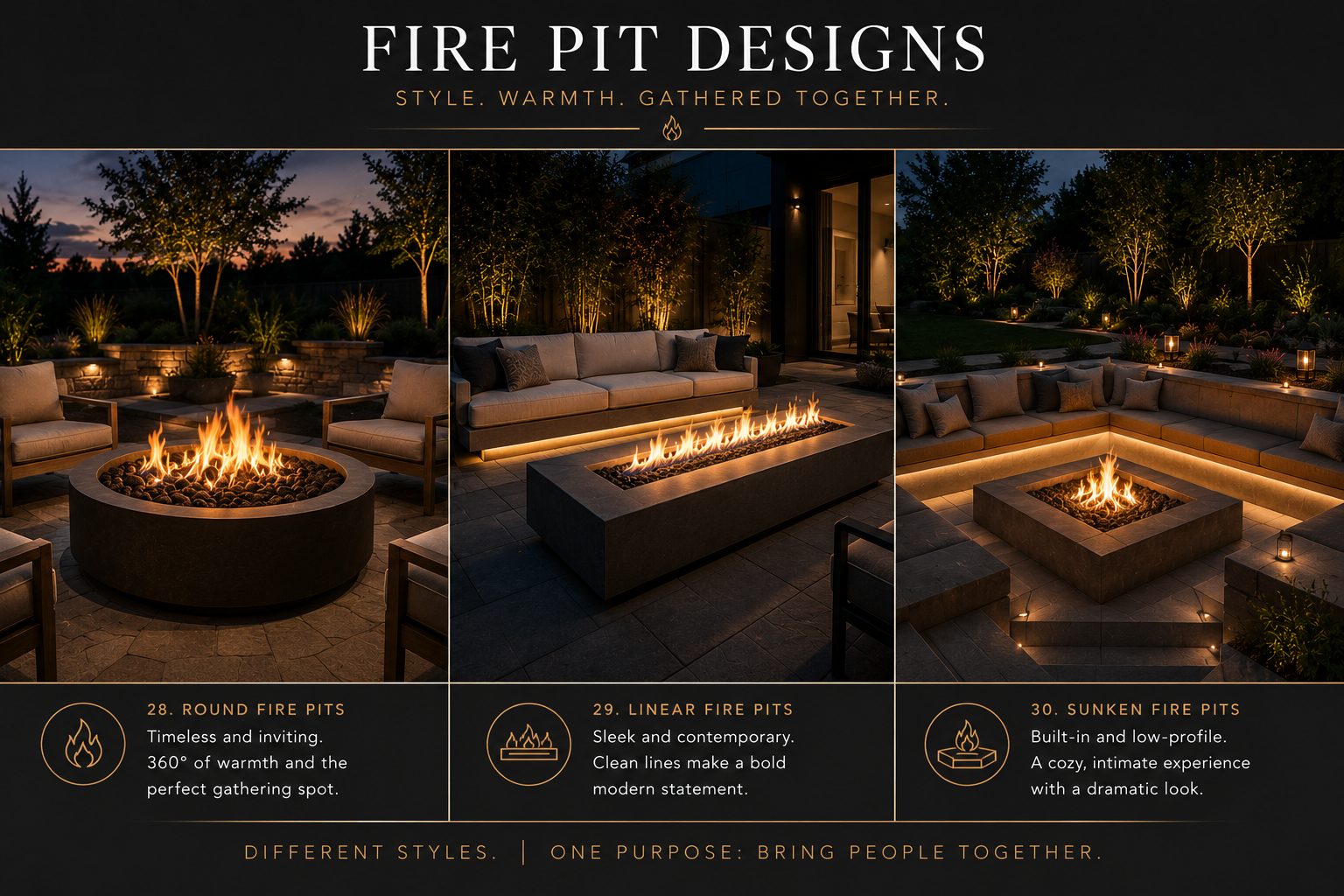
The most effective outdoor fire features aren't afterthoughts. They're planned first, with everything else arranged in relationship to the flame. A conversation pit around a fire table. Lounge seating oriented toward an outdoor fireplace. A linear fire feature that defines the edge of a dining space.
Fire pits — circular or rectangular, built-in or portable. Best for: casual gathering, flexible seating arrangements.
Outdoor fireplaces — freestanding or built into a wall. Best for: creating a dramatic focal point, wind protection.
Fire tables — combined coffee or dining table with integrated flame. Best for: compact spaces, dual-function design.
Fire walls/ribbons — linear gas features along a wall or ledge. Best for: modern architecture, ambient atmosphere.
The outdoor kitchen has evolved far beyond a built-in grill. Today's best versions include full cooking suites (grill, side burner, pizza oven), prep and serving counters, refrigeration, and even dishwashing. They're finished in the same quality materials as the home's interior kitchen.
The design principle: if you'd be embarrassed to have it in your indoor kitchen, don't put it outside either. Outdoor doesn't mean downgrade.
Porcelain countertops (UV-stable, stain-resistant), stacked natural stone or cast concrete for structure, powder-coated stainless steel for appliances, and permeable pavers or natural stone for flooring. Avoid: wood-look laminates (they delaminate), light-colored grout (stains immediately), and uncoated mild steel (rust).
The best outdoor spaces come alive at night — and that's entirely a function of lighting design. The goal isn't brightness; it's atmosphere. Warm pools of light, architectural uplighting, and the glow of fire combining to create something that feels intimate even in a large space.
The rule of thumb: if you can see the light source, it's probably too bright. The best outdoor lighting is invisible — you notice the effect, not the fixture.
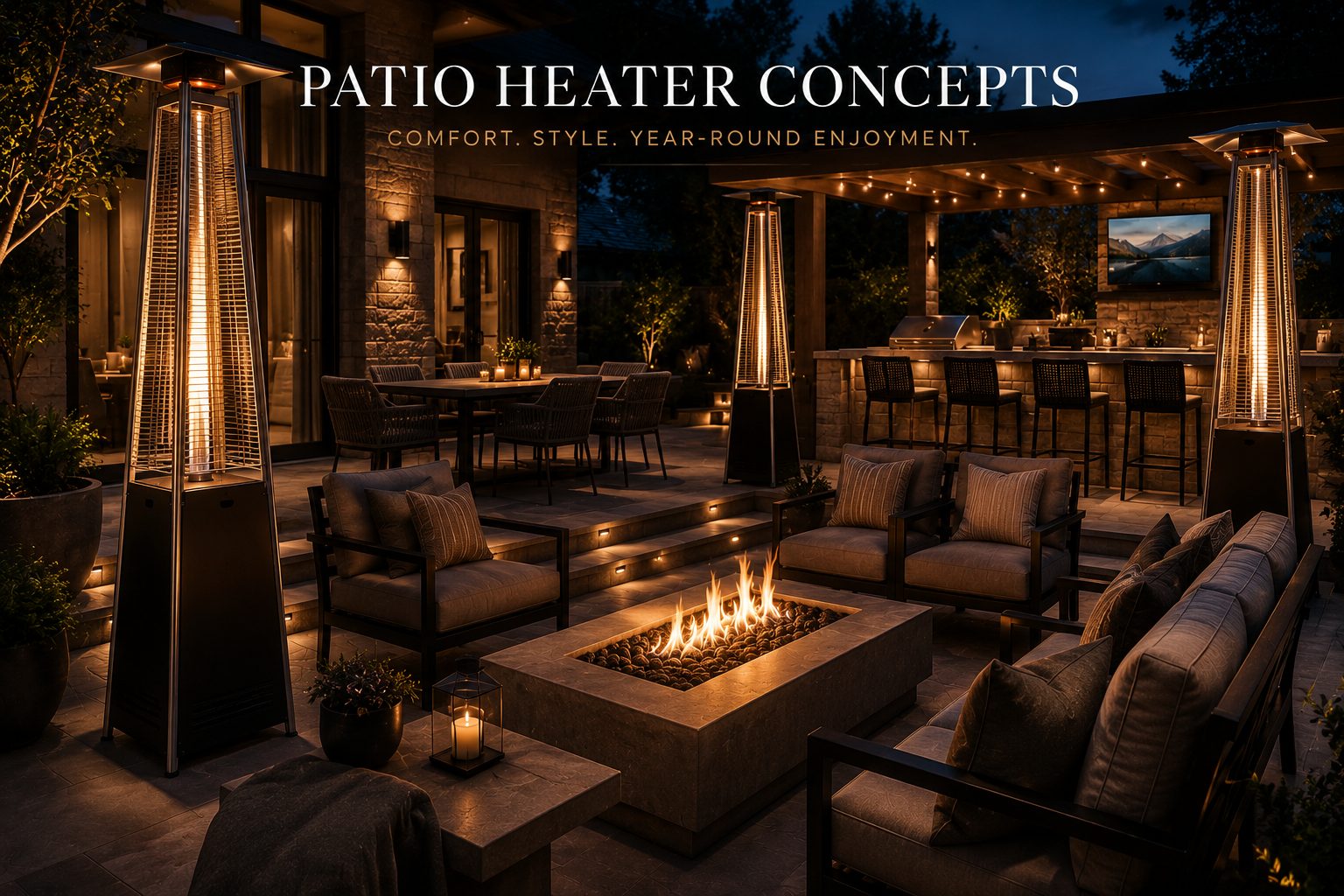
California winters are mild, but evenings drop. The spaces that get used twelve months a year are the ones that solve for comfort: overhead radiant heaters for dining areas, fire features for lounge zones, and retractable shade for the summer months. The investment in comfort infrastructure always pays back in usage.
Explore your own vision with our AI design tool or connect with a specialist.