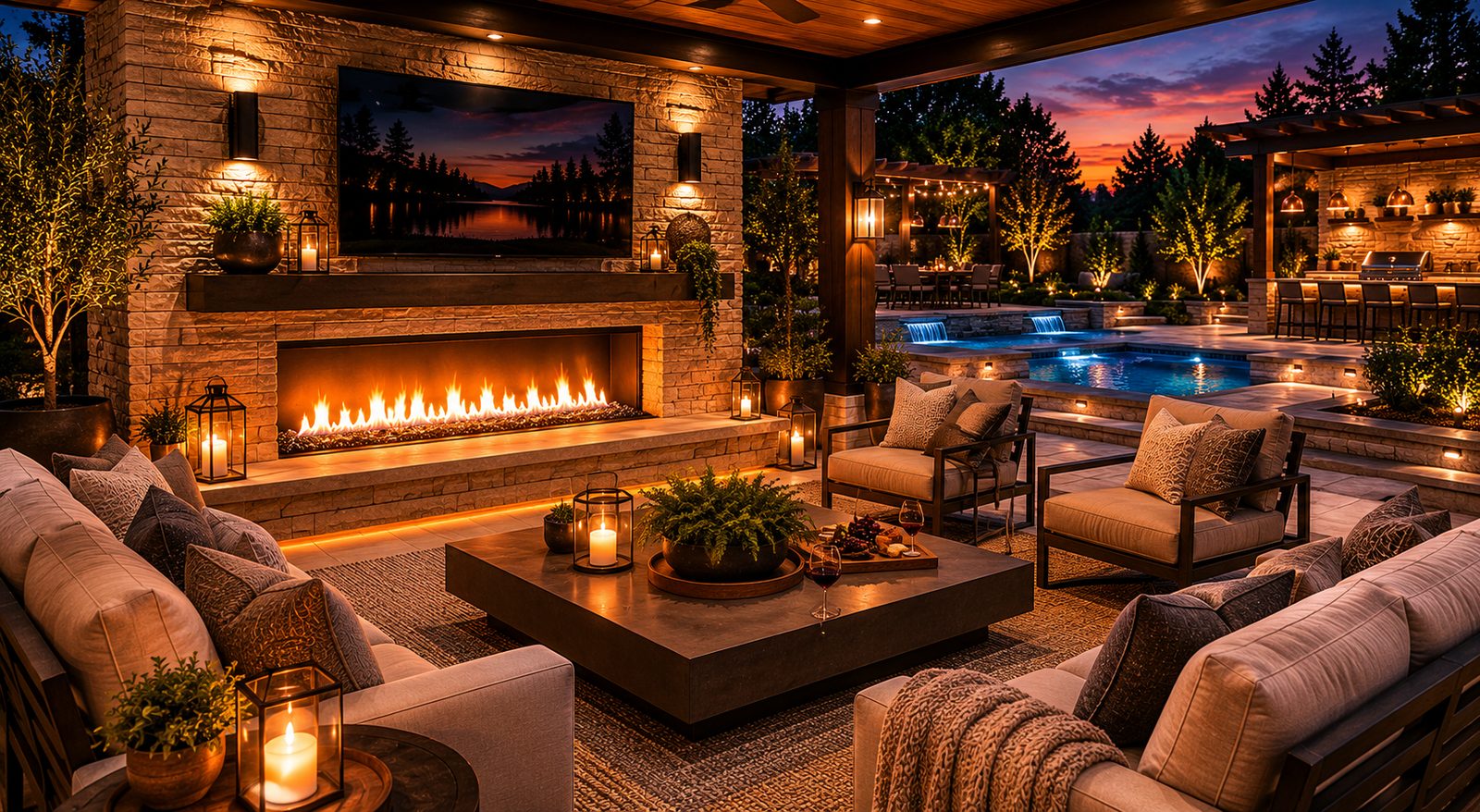
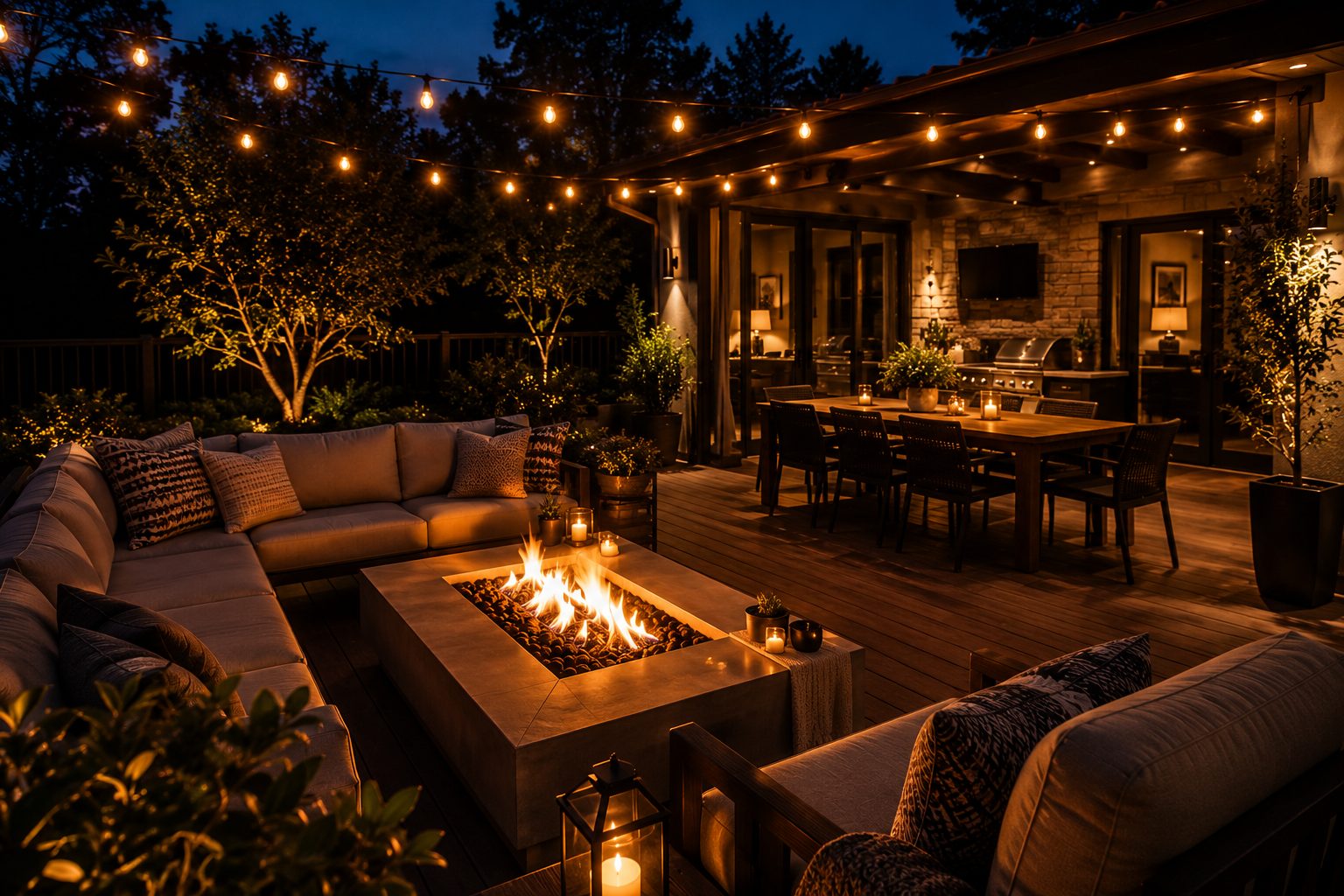
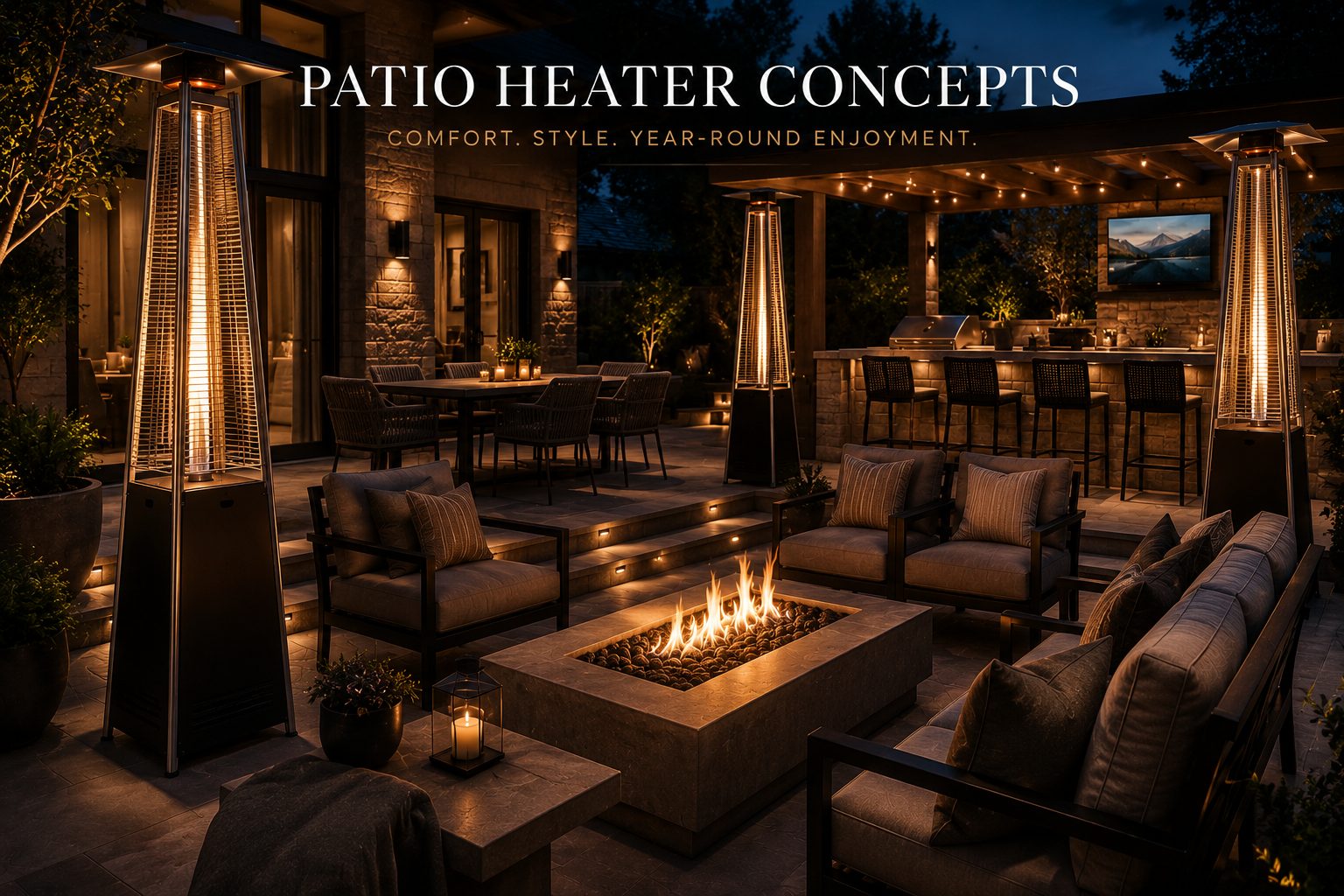
A fire pit is the simplest way to transform an outdoor space. The right design turns a yard into a destination.
The fire pit occupies a unique position in outdoor design. It's simultaneously the simplest fire feature and the most social — a circle of flame that naturally draws people around it, creating the intimate geometry of conversation (see outdoor entertainment spaces for full layout ideas).
There's a reason fire pits work so well socially: they create a circle. Unlike a fireplace, which faces one direction, a fire pit radiates warmth and light equally in all directions. Everyone has the same seat. Everyone faces the center. It's democratic design at its most elemental.
The best fire pit designs lean into this — with built-in seating that forms a full or three-quarter circle, or with furniture arrangements that create a conversational ring around the flame.
A shallow, wide bowl — typically 36" to 48" in diameter — that sits at knee height or lower. This is the most popular format because it keeps the flame below sightlines, allowing conversation across the fire. Materials: cast concrete, Cor-Ten steel, natural stone.
A coffee table or dining table with an integrated flame element. Functional and social — you get surface area for drinks and plates alongside the warmth and glow of fire. Best for: smaller patios where a dedicated fire pit would consume too much space.
A sunken seating area — dropped 12" to 18" below grade — with a fire feature at center. This is the premium expression of fire pit design. The lowered seating creates intimacy, the surrounding walls provide wind protection, and the geometry naturally orients everyone toward the flame and each other.
Small (2-4 seats): 24-30" fire feature, 8-10' total diameter. Medium (4-6 seats): 36-42" feature, 12-14' diameter. Large (6-10 seats): 48"+ feature, 16-18' diameter. Always allow 36-48" between flame edge and seating for comfort.
Gas fire pits dominate the luxury market for practical reasons: instant on/off, no smoke, no ash, consistent flame, and no fire code issues in most California municipalities. They also allow for more architectural designs — thin flame lines, glass media, and controlled burn patterns.
Wood-burning fire pits offer something gas cannot: the ritual of building a fire, the smell of burning wood, and the unpredictable dance of a real flame. For many homeowners, the experience is worth the maintenance. The design implication: wood-burning requires more clearance, a spark screen, and deeper combustion chambers.
Cor-Ten steel — develops a rich rust patina over time. Modern, industrial, ages beautifully.
Cast concrete — clean, minimal, available in custom shapes and colors.
Natural stone — stacked or carved, connects the fire feature to the landscape.
Glass fire media — reflective crystals that amplify the gas flame's glow. Colors from clear to amber to midnight blue.
The fire pit should feel like it belongs to the landscape — not placed on top of it. Partially sunken installations, matching hardscape materials, and integrated seating walls all help anchor the feature to its surroundings.
Explore your own vision with our AI design tool or connect with a specialist.