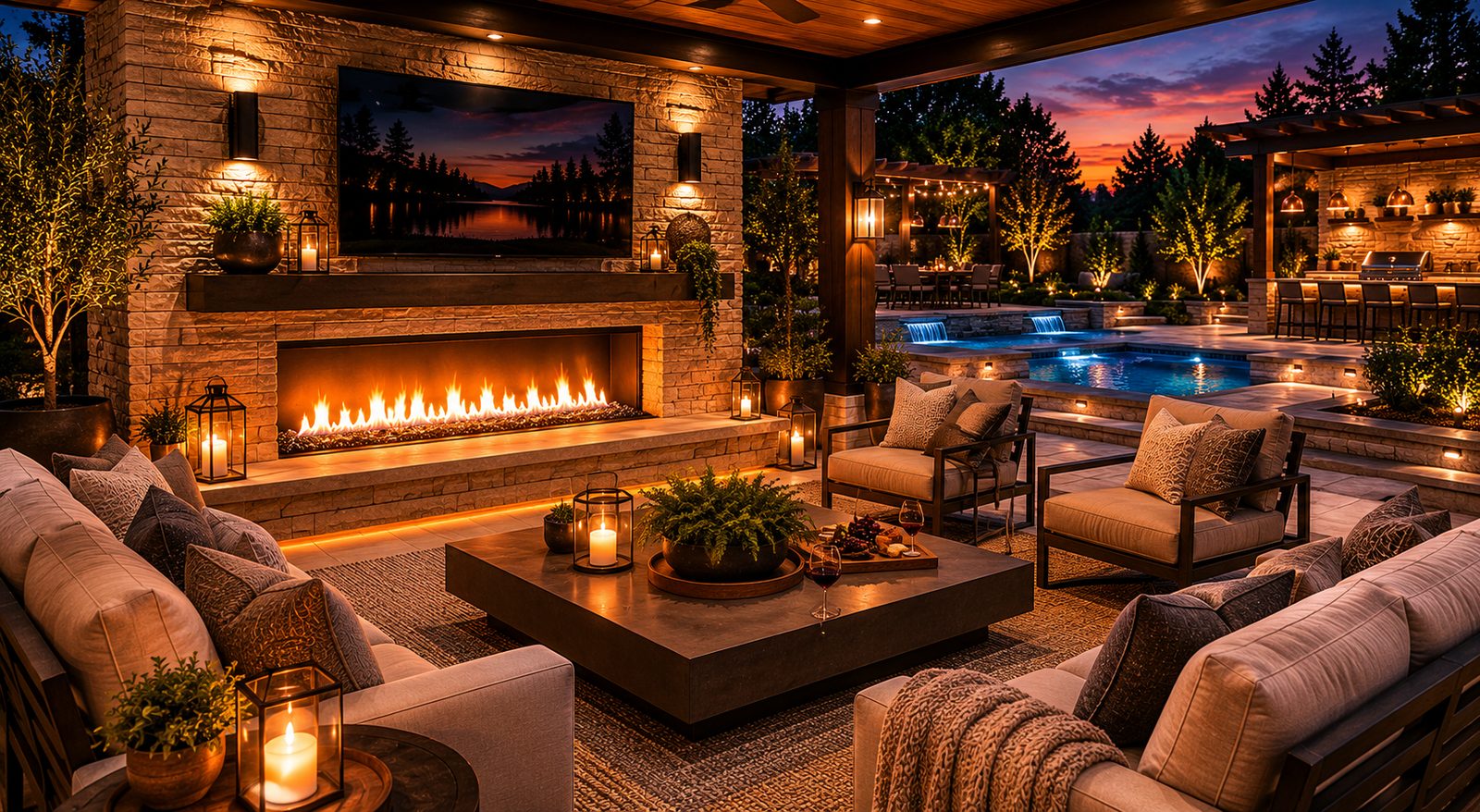
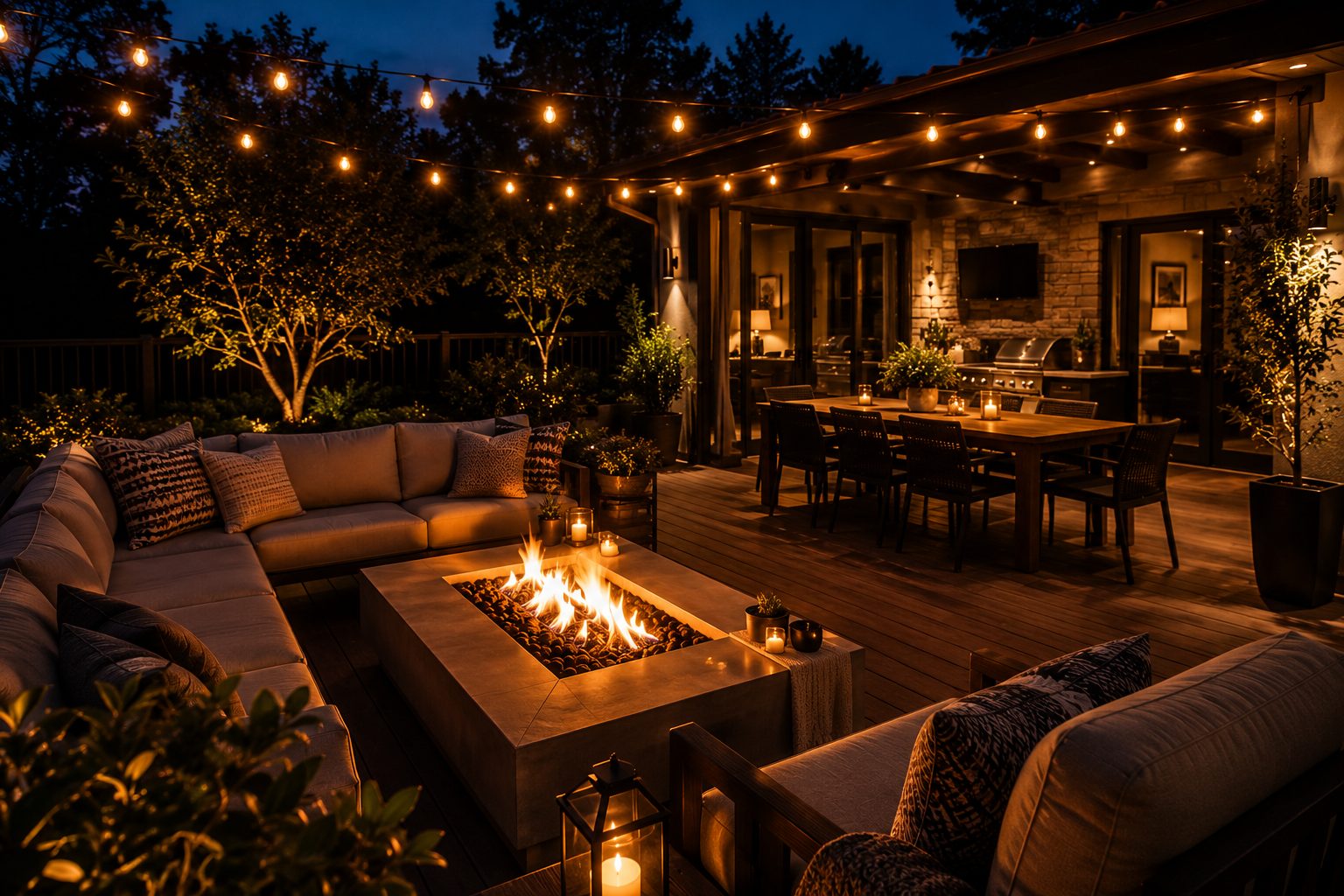
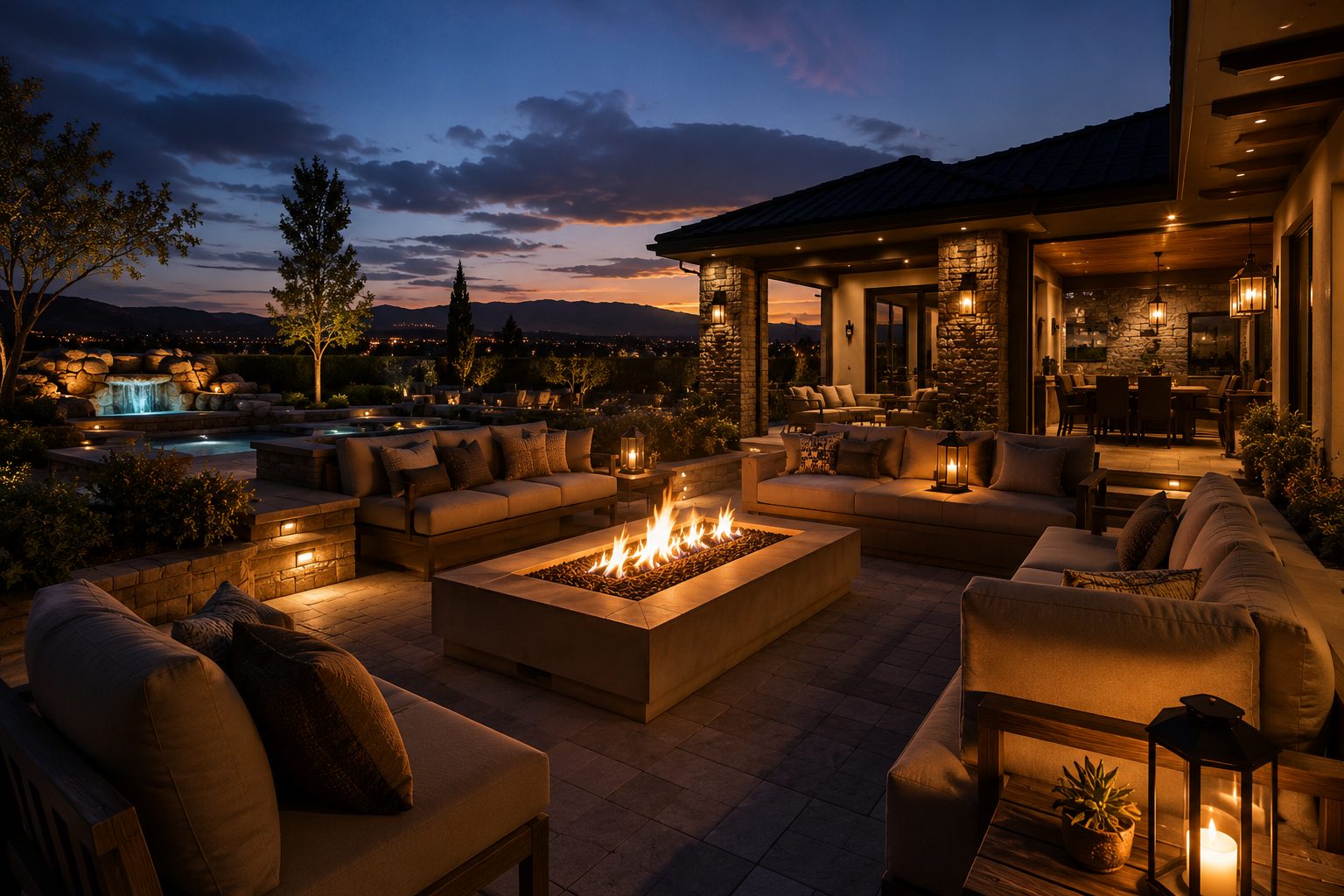
The backyard is the new living room. Designing spaces that host as well as they look — with fire, food, and atmosphere.
The most successful outdoor entertainment spaces share one quality: they make people stay. Not because of any single feature, but because the combination of warmth, comfort, food, and atmosphere creates a gravity that's hard to leave. Designing for that gravity is the art.
A built-in grill on a concrete counter is not an outdoor kitchen. A real outdoor kitchen has prep space, storage, a sink with running water, and enough counter surface to plate and serve without running inside. It has refrigeration. It has task lighting. It's a working kitchen that happens to be outdoors.
The best outdoor kitchens are positioned to let the cook face the guests — an island format that creates a natural bar where people gather while food is being prepared. The cooking becomes part of the entertainment, not a retreat from it.
Built-in grill (36" minimum), side burner, under-counter refrigerator, stainless sink, granite or porcelain counters, adequate task lighting, weather-resistant cabinetry.
How you arrange seating determines how people interact. Deep lounge seating around a fire pit encourages long, relaxed conversation. A dining table for 8-10 enables group meals that extend for hours. Bar seating at the kitchen island keeps the energy flowing.
The best outdoor spaces provide all three — and the transitions between them should feel natural. You drift from cocktails at the bar to dinner at the table to dessert by the fire without the evening ever losing momentum.
Fire is what keeps people outside after the sun goes down. A fire pit centered in the lounge seating creates the universal gathering point. The warmth is functional — it genuinely extends the usable hours — but the real value is atmospheric. Fire gives people something to look at, something to gather around, something that says: the evening isn't over.
Background music transforms an outdoor space. Weather-resistant landscape speakers hidden in planters or mounted under eaves provide ambient sound without visual clutter. A single zone of distributed speakers at conversation volume — not concert volume — adds energy without competing with dialogue.
The transition from daylight to evening is the moment an entertainment space either comes alive or dies. Layered lighting on dimmers — ambient from above, accent on landscaping, task at the kitchen, warm glow from fire — creates an atmosphere that draws people deeper into the evening.
Avoid: bright overhead floods. They flatten everything and kill atmosphere. The goal is pools of warm light with soft shadows between them.
Great entertainment spaces have a rhythm: arrive, drink, cook, eat, relax. The physical layout should support this progression — from arrival area to kitchen/bar to dining to lounge. Each zone has its own character, but the movement between them is effortless. That flow is what makes a space feel hospitable rather than staged.
Connect with a specialist to explore your vision.