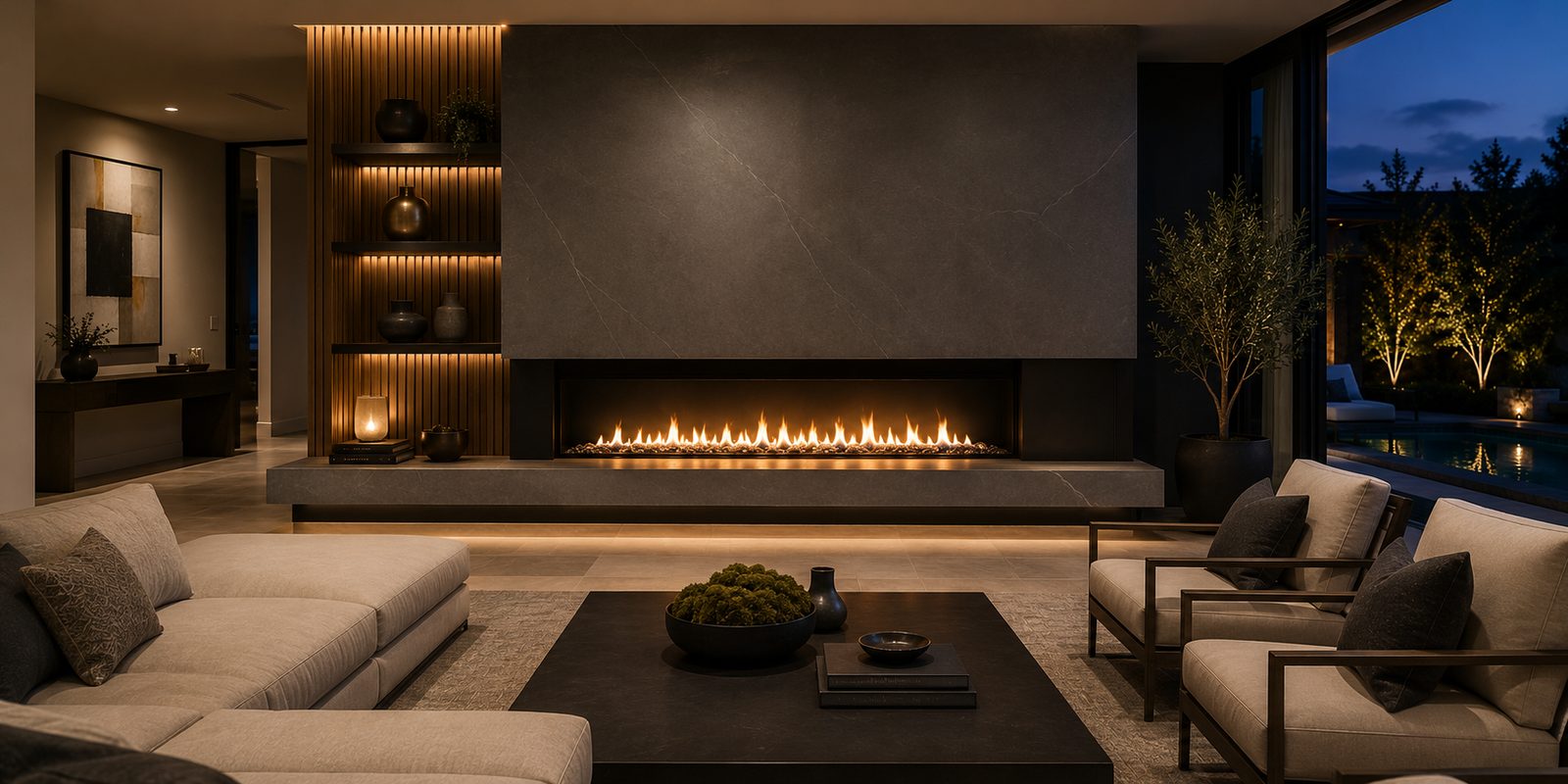
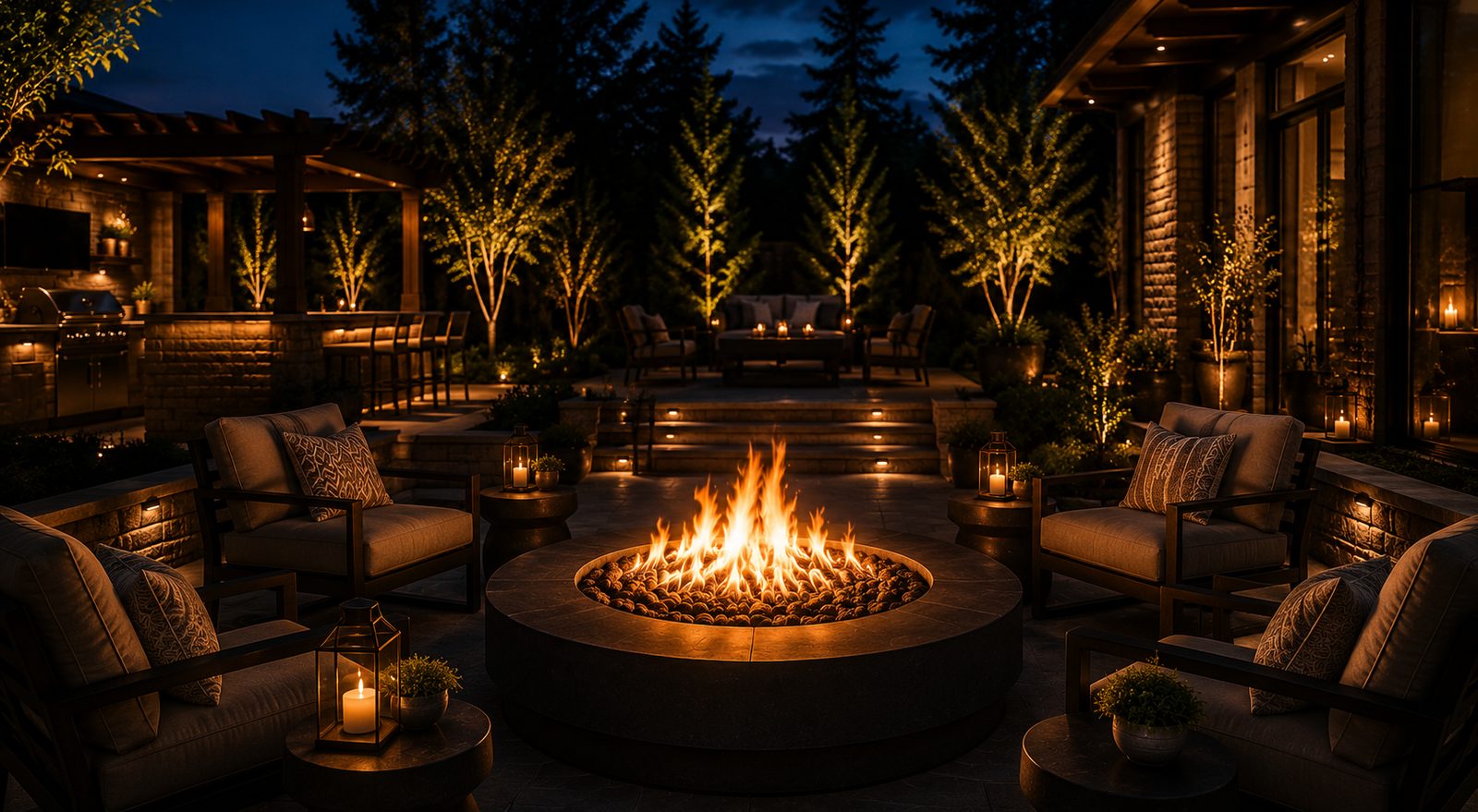
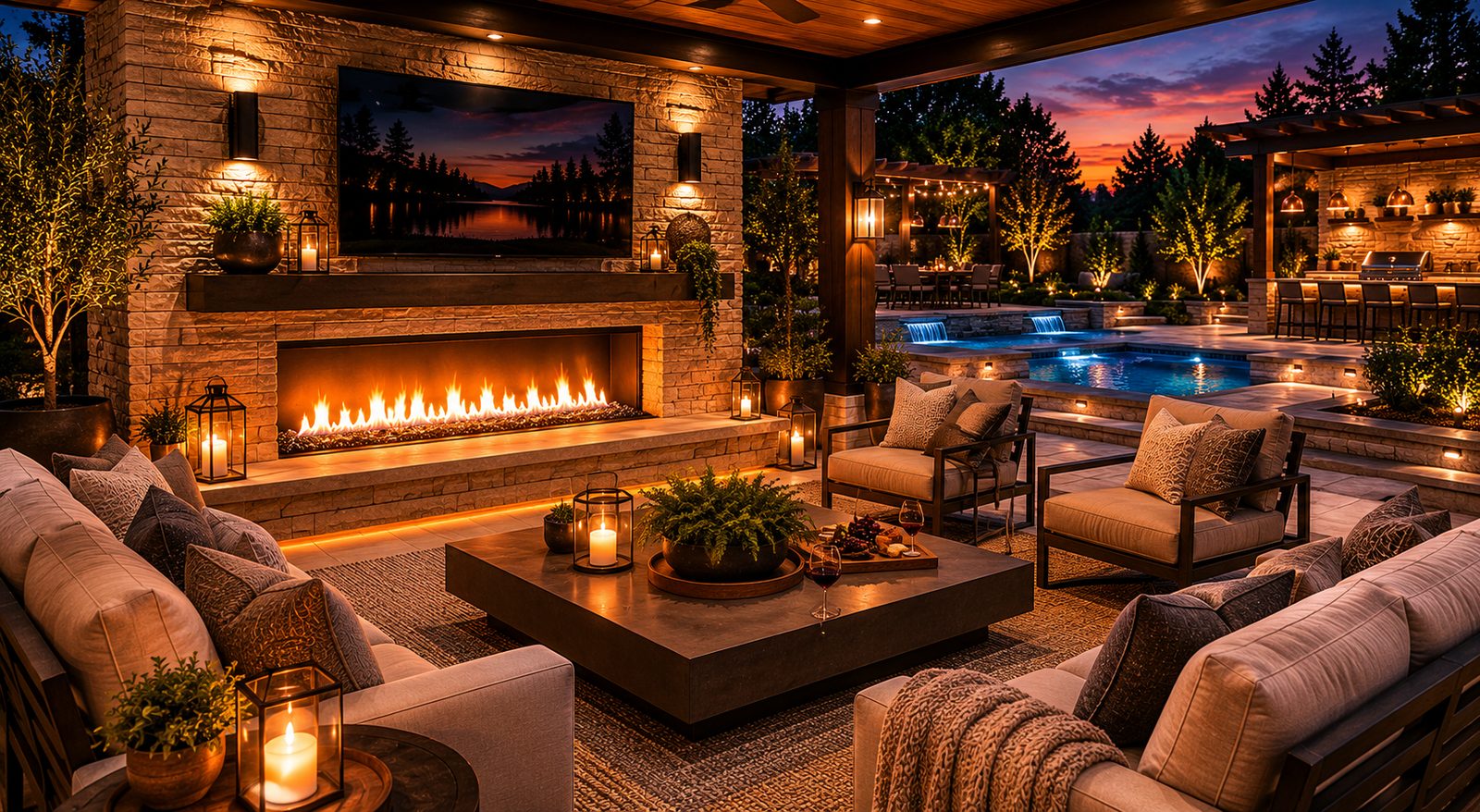
The fireplace is no longer just a heat source. It’s an architectural statement — a canvas for drama, warmth, and spatial design.
The modern fireplace has undergone a quiet revolution. What was once a brick box with a mantel has become one of the most expressive elements in contemporary architecture — a canvas for designers to create drama, warmth, and focal points that define entire rooms.
The single biggest shift in fireplace design over the past decade has been the move toward linear formats. These wide, low-profile units — often 48" to 72" or even longer — create a ribbon of flame that reads more like art than appliance.
Linear fireplaces work beautifully in modern architecture (see our full linear fireplace ideas guide) because they echo the horizontal planes of contemporary design. They sit flush in walls, disappear beneath televisions, or stretch across room dividers with clean, minimal framing.
Most popular sizes: 48", 60", and 72" linear units. Preferred fuel: direct-vent gas for consistent flame pattern. Growing segment: electric linear units for zero-clearance applications.
The fireplace surround has expanded dramatically. Where traditional mantels framed a small opening, today's designs often run the full height of the wall — using stone, porcelain slabs, or concrete to create an architectural moment that commands attention.
This trend works because it gives the fireplace presence without ornament. The material itself becomes the design — whether it's a honed marble slab, a textured limestone, or a raw concrete pour. The fire floats within something larger.
Porcelain slabs (large-format, minimal joints), natural stone in muted tones, blackened steel, and cast concrete. The common thread: material honesty, restrained color, and surfaces that age well.
The frameless fireplace — where glass meets wall with no visible trim — represents the ultimate integration of fire into architecture. These units require precise planning during construction but deliver a result that feels impossible: flame appearing directly from a wall.
See-through (double-sided) fireplaces have surged in popularity as room dividers. They allow two spaces to share a fire feature while maintaining visual separation — perfect for open-plan homes that need subtle zoning.
Indoor-outdoor fireplaces — whether gas or electric — units designed to be enjoyed from both sides of a glass wall — have become a defining feature of California modern homes. They blur the boundary between interior and exterior, making fire a year-round presence regardless of weather.
The best modern fireplaces don't compete for attention. They anchor a space quietly — creating atmosphere through presence rather than decoration. Simplicity is the hardest thing to execute well.
The trend is moving toward even greater integration — fireplaces as furniture, as room dividers, as outdoor sculptures. The technology is enabling thinner profiles, more realistic electric flames, and hybrid units that can switch between gas and electric operation.
The constant: fire remains the single most powerful element for creating atmosphere in a space. How we frame it changes. Why we want it never does.
Explore your own vision with our AI design tool or connect with a specialist.