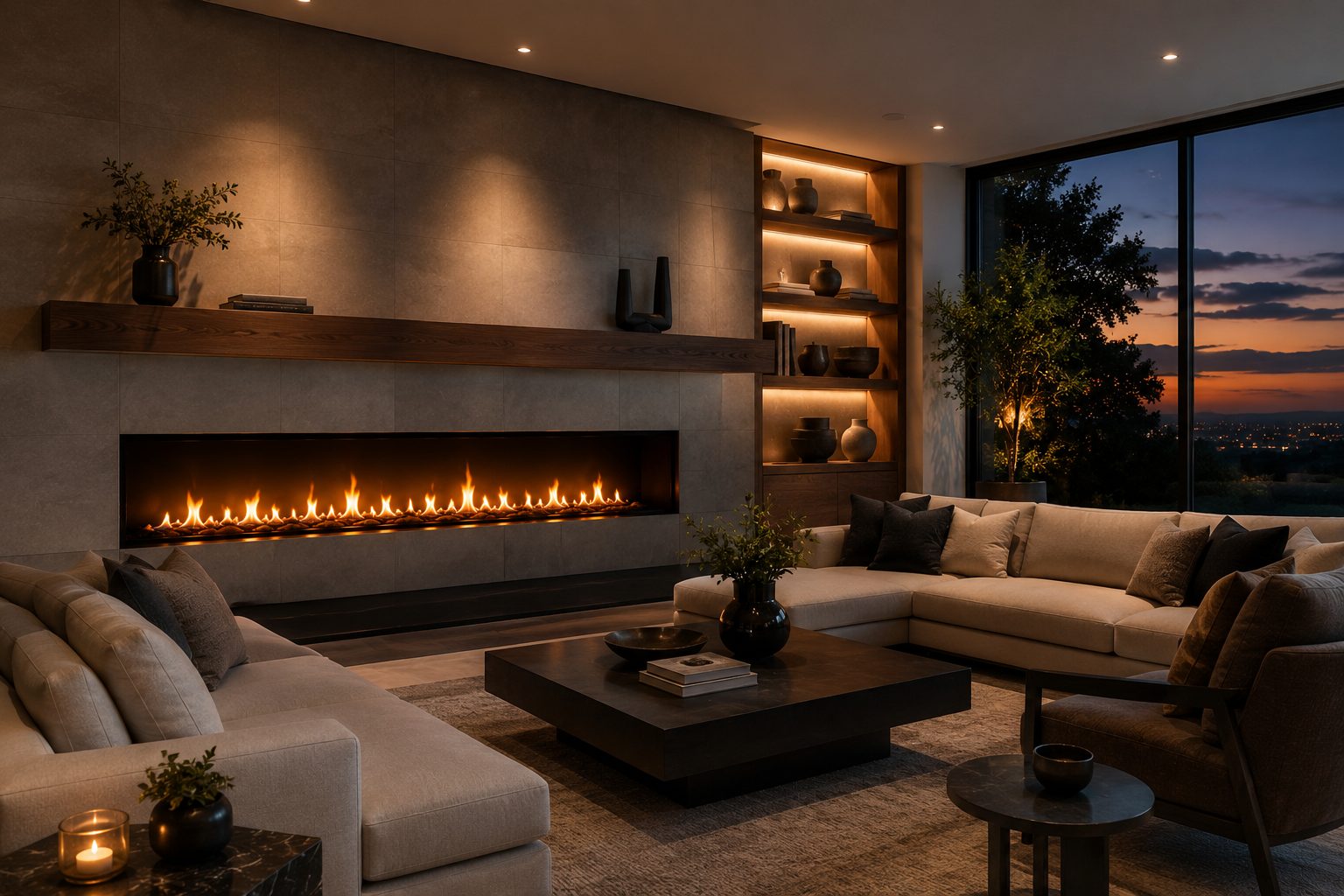
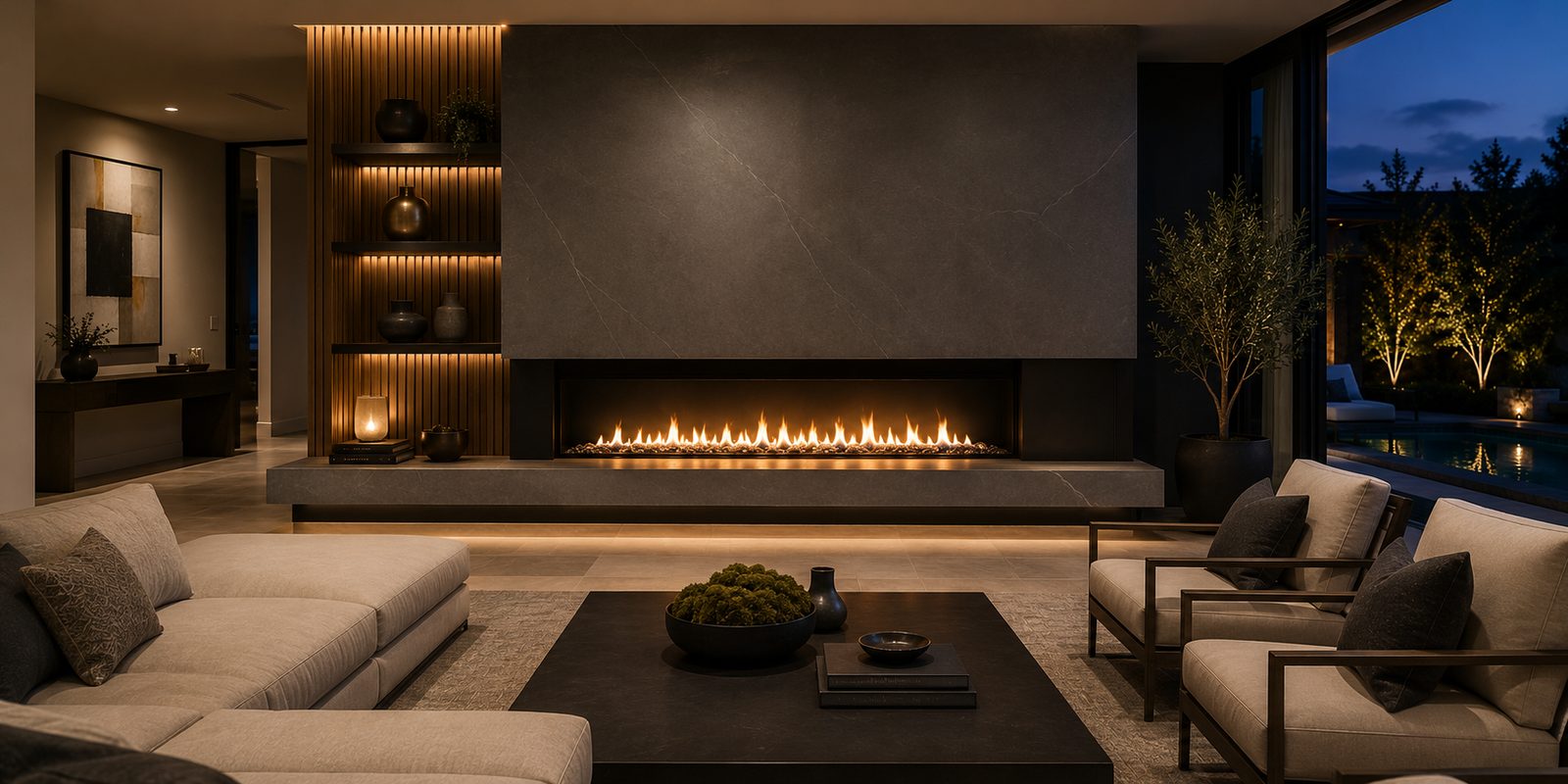
Two technologies, two experiences. Understanding the real differences — beyond the spec sheet.
The gas-versus-electric debate used to be simple. Gas meant real flame and electric meant a glowing box. That's no longer true. Modern electric fireplaces have closed the gap dramatically — while gas technology has pushed toward thinner profiles, cleaner burns, and more architectural integration.
A gas fireplace produces real flame. There's no simulation, no LED trickery — you're watching combustion, and the human eye knows the difference. The way a gas flame moves, the subtle shifts in color from blue base to orange tip, the radiant heat you feel on your skin — these are things no technology has fully replicated.
Modern direct-vent gas units have evolved into architectural instruments. Linear formats from 36" to 96" wide produce a clean ribbon of flame behind tempered glass. They vent directly through an exterior wall — no chimney required.
Requires gas line and venting. Professional installation essential. Operating cost: ~$0.50–$1.00/hour. Produces real radiant heat (20,000–40,000 BTU typical).
Electric fireplaces have undergone a quiet revolution. The best modern units use LED technology, refracted light, and water vapor to produce flame effects that are genuinely convincing — especially in dimmer ambient settings.
The real advantage is freedom. No venting means zero clearance — any wall, any room, any floor. A 60" linear electric unit can go from box to wall in hours, not weeks. For condos, high-rises, or renovations where gas would be prohibitively expensive, electric isn't a compromise — it's the only sensible option.
Standard 120V or 240V outlet. Supplemental heat only (~5,000 BTU). Near-zero installation cost vs gas. Flame effect operates independently of heater — ambiance year-round without heat.
Gas wins on authenticity. Full stop. If you've ever sat in front of a real fire and felt that specific calm, gas delivers it. The movement, the warmth, the subtle sound — it's genuine.
Electric has improved enormously, and in a dimly lit room, the best vapor fireplaces can fool casual observers. But up close, in daylight, the illusion weakens.
Electric wins on versatility. Interior wall with no exterior access? Electric. Bedroom or home office? Electric. A 100" linear unit? Electric scales wider and thinner than gas.
Gas wins on gravitas. A well-installed gas fireplace has weight and presence that comes from real flame and real heat. It feels permanent. Intentional.
Electric: $2,000–$5,000 all-in for quality linear + professional mount. Gas: $5,000–$15,000+ depending on gas line, venting, and surround.
Operating costs favor electric for ambiance-only use. Gas costs more but provides meaningful supplemental heat.
The best homes often use both. Gas as the primary statement in the main living area. Electric in secondary rooms, bedrooms, or accent walls where ambiance matters more than authenticity. Choose based on what the space needs — a fireplace is a long-term investment in how a room feels.
Connect with a specialist to explore your vision.